Tag Archive for: Essays

Women and Modesty

In Muslim nations and communities, women dress in burkas or long-sleeved abaya in order to be considered appropriate in their culture. Yet in Indian culture, an exposed belly is not considered revealing—whether it is 20 years old or 80, and whether its size is 2 or 32. Meanwhile, in the United States, Amish women dress only in dresses comprised of a simple scoop-neck bodice attached to a loosely gathered straight skirt, and perhaps only pinned together, because pleats and buttons are considered too ostentatious.

Depending on where you live, culture does play into how one should dress. However, with a few exceptions here and there, most Western nations have a lot of leeway in what is considered appropriate or inappropriate for women to wear. But do we have that much latitude in God’s view?

Biblically, women should not be ashamed of their bodies. When God created Eve, He made her beautiful, and women are designed to want to be that way. Peter acknowledges that women want to be beautiful, and he extends that to beauty that is more than skin deep (1 Peter 3:3). Our character needs to be beautiful, and every godly woman wants to be beautiful on both the outside and the inside.

So, if God meant for women to be beautiful, why must Christian women be concerned with what they wear in public? Does God care if we wear yoga pants and a cropped sweatshirt to the mall? Does God care if we wear a low-cut blouse with a keyhole opening? Does God mind if, when we sit down and cross our legs, anyone in front of us can see halfway up our thighs? Although it is godly for women to desire to be beautiful, is that the same as being sexy—by definition, “sexually suggestive or stimulating”—in public?

Read more
Mr. Weston’s LCN Articles

In last week’s podcast, we mentioned two Mr. Gerald Weston articles, and we just realized we forgot to post links! So, here they are, the first of which might already be in your home!

We hope you’ll consider clicking through. Both make for excellent pre-Spring Holy Days reading.

Cats and Cows in Space

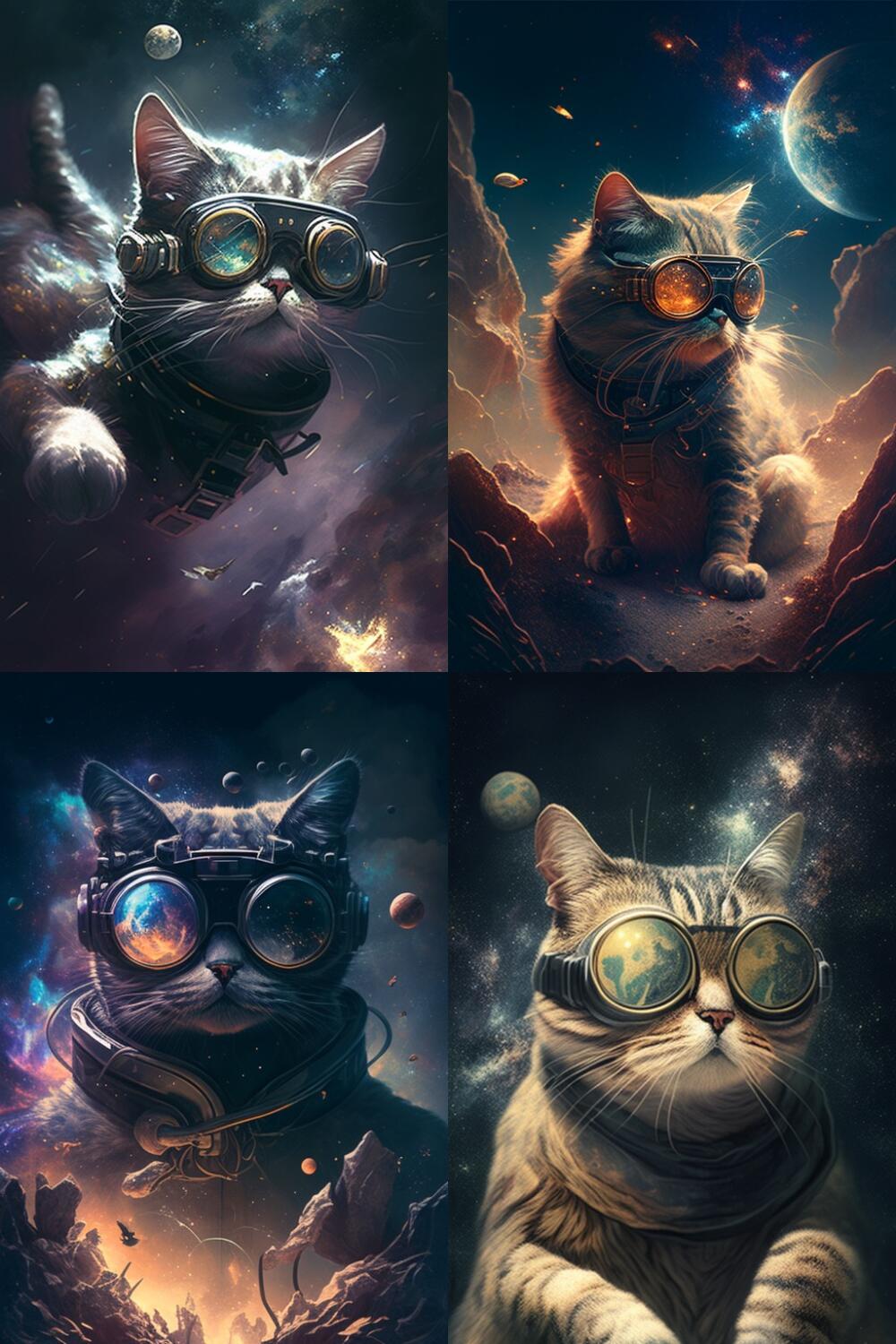
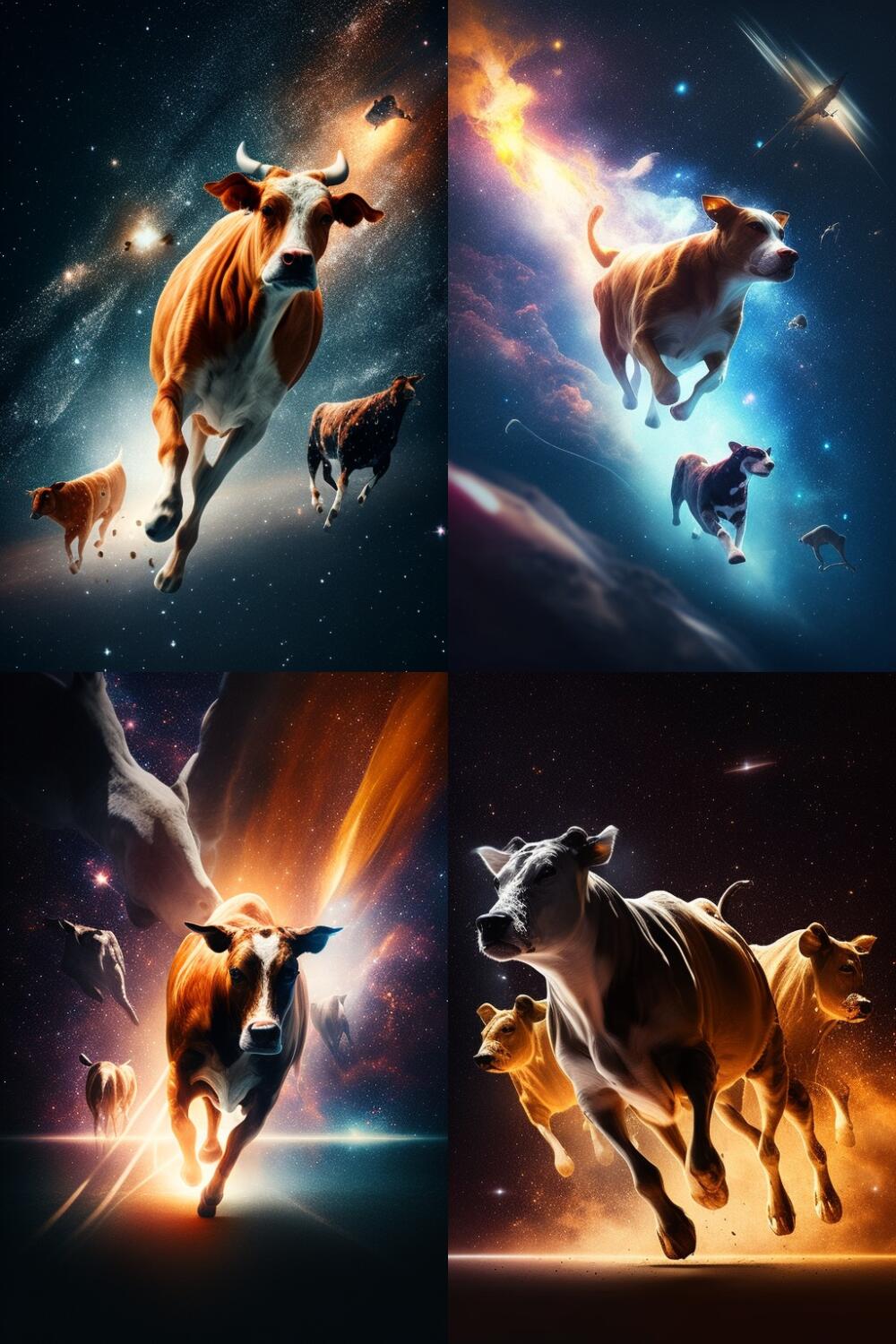
In Podcast 43—“A.I.—Friend or Foe?”—we talk about the ability artificial intelligence now gives people to images with just a simple textual prompt. So, we wanted to give you an example of that. We’ll have more realistic images in the April-May 2023 Tomorrow’s World magazine, but these are excellent examples of how someone with no artistic ability is able to generate completely original images using these AI tools.

Well, Mr. Ben Graham, our Graphics Designer does have artistic ability, and he’s the one who generated these—but the point is that he didn’t use those skills. He simply typed in a text prompt describing what he was looking for, and the AI did the rest. In this case, the AI was Midjourmey. I’d include his prompts, but I forgot to get them. However, they were not complicated! We’ll add them later if we can get them from him next week.

In the meantime, take a close look at each image. They look amazing, but each has one or more “tells” that help indicate it is not human-made. That is, while it looks like something an artist would make, it has elements in it that clearly no human being would add. See if you can find them!

Then, if you haven’t listened to the podcast, click here and have a listen.

TW Article: “Should We Kiss Dating Hello?”

Here is the July-August 2020 Tomorrow’s World article by Mr. Jonathan McNair that was referenced on this week’s podcast: “Should We Kiss Dating Hello?” Though it was written to parents, it is really instructive for anyone wanting to understand what we should be focusing on in different stages of our development, versus the priorities pressed on us by a world that sees us as “walking wallets” instead of growing human beings with an eternal future who are seeking to live a good life.

Just click here to go straight to it!

Past TW Article on Profanity

The podcast this week (posted below—click here if you haven’t heard it, yet!) focused on how God doesn’t want us to cuss and curse and use bad language. After we finished, we remembered a related, short article from back in mid-2019 by Mr. Dexter Wakefield, titled “Profanity!” Check it out at the link below if you haven’t read it. It’s a quick read!

And, by the way, be sure to come back and look for additional posts in addition to the weekly podcasts. We’re working harder to add helpful content, and if you scroll just a bit, you’ll see recent posts about not just the podcast, but also a related sermon Mr. Weston gave, but also a link to the Living Education–Charlotte blog, as well. Be sure to poke around, and we’ll continue working to add more content in the future! In the meantime, here’s the article:


* Note, it’s not “profanity by Mr. Wakefield,” but “Profanity!” which is the title of an article by Mr. Wakefield. Very important difference!

In Search of the Eternal (Dopamine) Buzz

Some of us have noticed a lot of podcasts talking these days about dopamine—the neurotransmitter your brain uses to “reward” behavior—and how our current society is addicted to triggering it in so many unhelpful ways. (For example, social media is like a dopamine-triggering machine training you to keep on scrolling and scrolling and scrolling…) One neurologist said in a podcast recently that, in a way, the only real currency in the world is not the U.S. dollar, the British pound, the EU’s euro, or what-have-you. He suggests the only real currency in the world is dopamine, and that is what everyone in the world is “trading” in. And, in a similar sense, triggering our reward centers through dopamine hits is how many in the world—social media corporations, marketers, entertainment companies, etc.—are “reprogramming” our brains without our even realizing it.

All the talk reminds us of two articles by Mr. Gerald Weston that are very worth your time.

One that is very old but, ironically, increasingly relevant: “In Search of the Eternal Buzz,” from a 2006 TW magazine issue. It’s a short read—less than 10 minutes. Give it a shot.

The other is Mr. Weston’s article on the influence of social media, “Tame the Social Media Monster!”—the cover article of the 2018 March-April issue.* Of course, social media is not the only arena in which people are using our neurology against us (which Mr. Weston makes very apparent in the article, with comments from tech experts, themselves, who helped design it all), but reading about it—and equipping yourself—is a great place to start. It’s a longer read, but should still take most readers under 20 minutes.

Here are the two links again. Check them out!

* Unnecessary Behind-the-Scenes Comment™: We loved the cover on this issue. It was an early experiment more than four years ago in doing something a little different, and we were glad Mr. Weston let us play with it!

Biohacking and Thankfulness

Here in the U.S., Thanksgiving Day is tomorrow, and while not all of our teen and young adult readers are in the U.S., many of you are—and even for those who are not, when does thankfulness go out of style?

In the spirit of that, consider enjoying this short read from Mr. John Robinson titled “Hacking Thankfulness,” initially published in our January 2021 Tomorrow’s World. Mr. Robinson highlights how secular science and “biohacking” advocates have come to understand the power of gratitude and how we improve our health and our lives, in general, and the benefit of actively cultivating a spirit of thankfulness—an attitude the Bible has recommended for centuries.

We refer to this article in the podcast we plan to publish later this week, and we wanted to make sure we gave you a link so you could read it for yourself! Just click below—it’s only a 4-minute read, and worth the time!

And for those who do observe Thanksgiving Day, we pray yours is a happy one that brings to mind the many, many things in your life for which you can thank your Creator!